

Bell Let’s Talk Day: How a Telecom Brand Built a Mental Health Day
Published · Last updated · By Gaurav Phogat
Bell Let’s Talk Day is a Canadian mental health day that a telecom company created for itself, starting in 2011. For years Bell paid a few cents for every call, text and social share made on the day. The lesson: give people a tiny, free action that visibly adds up, and a single day can carry a cause for over a decade.
About Bell Let’s Talk Day
Bell Let’s Talk Day is held on a Wednesday in late January. It is not a UN or WHO day: Bell Canada created it as the centrepiece of its Bell Let’s Talk programme, which began in 2010, with the first Day in January 2011. The 16th annual Bell Let’s Talk Day was held on Wednesday, 21 January 2026, under the theme “taking a moment for mental health”. Bell asks people to check in with themselves, reach out to others, join local events such as workshops and flag raisings, and share what they do with #BellLetsTalk.
New to the topic? Start here: PR & Communications sets out the reading order.
Bell Let’s Talk: turning everyday messages into mental health money
| Campaign | Bell Let’s Talk |
| Organisation | Bell Canada |
| Agency | Not verified, so not named |
| Year and country | 2010 (first Day 2011), Canada |
| Linked health day | Bell Let’s Talk Day (its own day, late January) |
| Timed to the day? | Yes. The campaign created the day |
| Channels | Bell’s phone and text network, social media, TV, events, community grants |
| Headline result | 1.3 billion+ interactions registered; Bell reports $194 million invested since 2010 (self-reported) |
| Recognition | No award verified, so none listed |
The problem it had to solve
Mental illness carried stigma, and people did not talk about it. Bell set out to raise awareness and reduce stigma around mental illness in Canada. The brand problem sat underneath: a telecom company needed a reason for people to join in that felt useful rather than promotional. Bell has said it put its own name on the cause because no one else would.
The idea in one line
Make talking the donation: every conversation on one day puts a little money into mental health.
How it worked
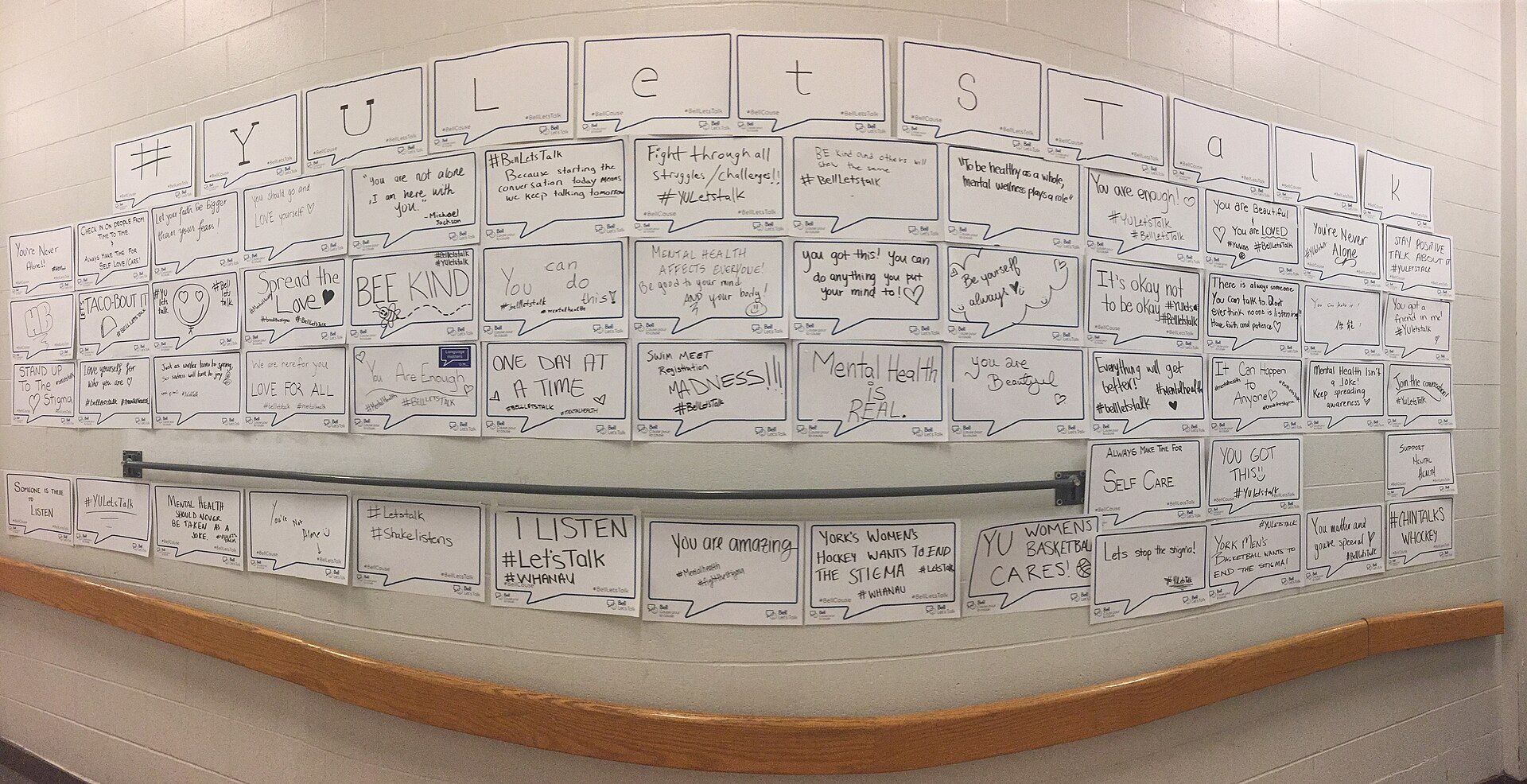
- The mechanic: Bell pledged 5 Canadian cents for each interaction on the Day. That counted calls and texts on Bell’s networks, plus hashtag uses and video views on social platforms.
- A face: Olympian Clara Hughes, who has spoken about her own depression, became the main spokesperson.
- Money that goes somewhere visible: a Community Fund gives grants of $5,000 to $25,000 to registered mental health organisations, with 888 grants totalling over $15 million, alongside large gifts to hospitals and helplines.
- The 2023 change: Bell dropped the five-cent model in 2023 and replaced it with a $10 million commitment. The 2026 edition kept a $10 million commitment and focused on local events and a toolkit.
Results
The numbers are big and mostly self-reported by Bell. Interactions grew year after year, reaching 164,298,820 in 2022 and a record donation of $8,214,941. In total, Wikipedia’s summary cites more than $121 million committed since the start, while Bell’s own January 2026 advisory puts total investment at $194 million and counts more than 1,700 investments in organisations. The two figures likely measure different things, so I would quote Bell’s figure only with “Bell reports”. What the numbers do not show is a measured fall in stigma caused by the campaign. Interactions measure participation, not attitude change.
What makes it stand out
- The behaviour ask is free and normal. Sending a text costs the person nothing, and talking is the very thing the campaign wants to encourage. Action and message are the same.
- A built-in scoreboard. A running count of interactions gave media and users a daily story to follow.
- The brand fits the act. A telecom company asking people to communicate is a natural link, not a stretch.
- Owning a date. Creating its own day meant Bell never competed with other causes for the slot.
- Consistency. Sixteen editions under the same name and the same kind of date built memory that a one-off film cannot.
Criticism and limits
Critics, including advocate Lucy Costa, have argued that a company’s profit motive sits uneasily with good mental health strategy. A former radio host said she was fired soon after disclosing her mental illness, which Bell denied. Lawyer Michael Spratt criticised Bell for profiting from expensive jail phone calls used by inmates with mental illness; Bell said provincial contracts set the rates. The CRTC ordered Bell to disclose jail phone revenue, reported at $64 million gross for 2013 to 2021. The lesson for any brand: when you lead a cause, people will audit your own conduct against it. The per-interaction model also had a cap problem: once it became a fixed $10 million, the link between “my text” and “more money” weakened.
Would it pass in India today?
As a corporate mental health programme from a non-medical brand, the NMC rules would not apply directly; ASCI’s rule against misleading claims would, so the donation mechanic must be stated plainly, including any cap. If an Indian hospital copied it, the frame matters. Running a stigma-reduction day and funding helplines is health education, which clause 8.2 of the NMC 2026 guidelines allows. Using patients’ recovery stories to promote the hospital would breach clause 8.1(ii), and consent would not fix that (clause 6.2). A celebrity sharing their own story is fine only if they are not presented as the hospital’s patient (clause 8.1(v)). Any engagement data captured through a “share to donate” page needs clear consent under the DPDP Act.
See the campaign: Bell’s 2026 Bell Let’s Talk Day media advisory
What an Indian hospital can borrow for Bell Let’s Talk Day
Bell Let’s Talk Day is Canadian, so an Indian hospital should not borrow the date. It should borrow the mechanic and apply it to a day Indians already mark, such as World Mental Health Day on 10 October.
- Low (under Rs 1 lakh): “One check-in” social prompt. Channel: Instagram, WhatsApp channel, LinkedIn. Ask followers to message one person and ask how they are, then share a simple card. Every post points to India’s government mental health helpline, Tele-MANAS on 14416. Compliance: health education under clause 8.2 of the NMC 2026 guidelines; no patient stories (clause 8.1(ii)).
- Mid (Rs 1 to 10 lakh): share-to-fund with a published cap. Channel: a campaign microsite plus social. For each share, the hospital’s foundation funds counselling hours at a partner NGO, up to a stated ceiling. Publish the cap and the final amount. Compliance: ASCI guidelines against misleading claims; collect only the data you need, with DPDP-compliant consent.
- High (above Rs 10 lakh): a workplace talk programme. Channel: corporate partnerships, LinkedIn, on-site sessions. Psychiatrists and psychologists run stigma talks in their own names for employers. Compliance: talks in the doctor’s own name are allowed under clause 8.2; avoid “best” or “No.1” claims (clause 8.1(iii)); any AI-made visuals must be labelled (clause 7.2).
Related reading
- Iconic Health Campaigns: the full series
- Health awareness days calendar for India
- Newsjacking and health awareness days
- NMC advertising guidelines 2026, explained
Sources
- Wikipedia: Bell Let’s Talk
- BCE: Media advisory, Bell Let’s Talk Day is on Wed, January 21 (2026)
- MobileSyrup: Bell will no longer donate five cents per post on Bell Let’s Talk Day (2023)
- People Matters: Tele MANAS receives 14.7 lakh calls since 2022
Questions people ask
The 16th Bell Let’s Talk Day, held on 21 January 2026, focused on “taking a moment for mental health”, asking people to check in with themselves and reach out to others.
Bell Canada, the telecom company, started the programme in 2010 and held the first Bell Let’s Talk Day in January 2011. Olympian Clara Hughes became its best-known spokesperson.
It made the action free and natural: a call, text or share counted towards a donation, so taking part felt useful. A visible running total, a consistent date and a brand that fits the act of talking helped it grow for over a decade.
Use a simple, free action such as checking in on one person, point every post to a helpline like Tele-MANAS (14416), keep the content educational and in doctors’ own names, and avoid patient stories or superlative claims, in line with India’s NMC 2026 guidelines.
Read my takes first in Google Search