
The attendant is a customer: rooms, food, prayer space and family
The attendant experience is the part of international patient care most hospitals improvise. The people who travel with a patient need sleep, food they can eat, a quiet room, working connectivity, a fixed daily briefing and honest information about money. Ask how many are coming at enquiry, record it in the case, publish what you do and do not provide, and ask attendants for feedback in their own right.
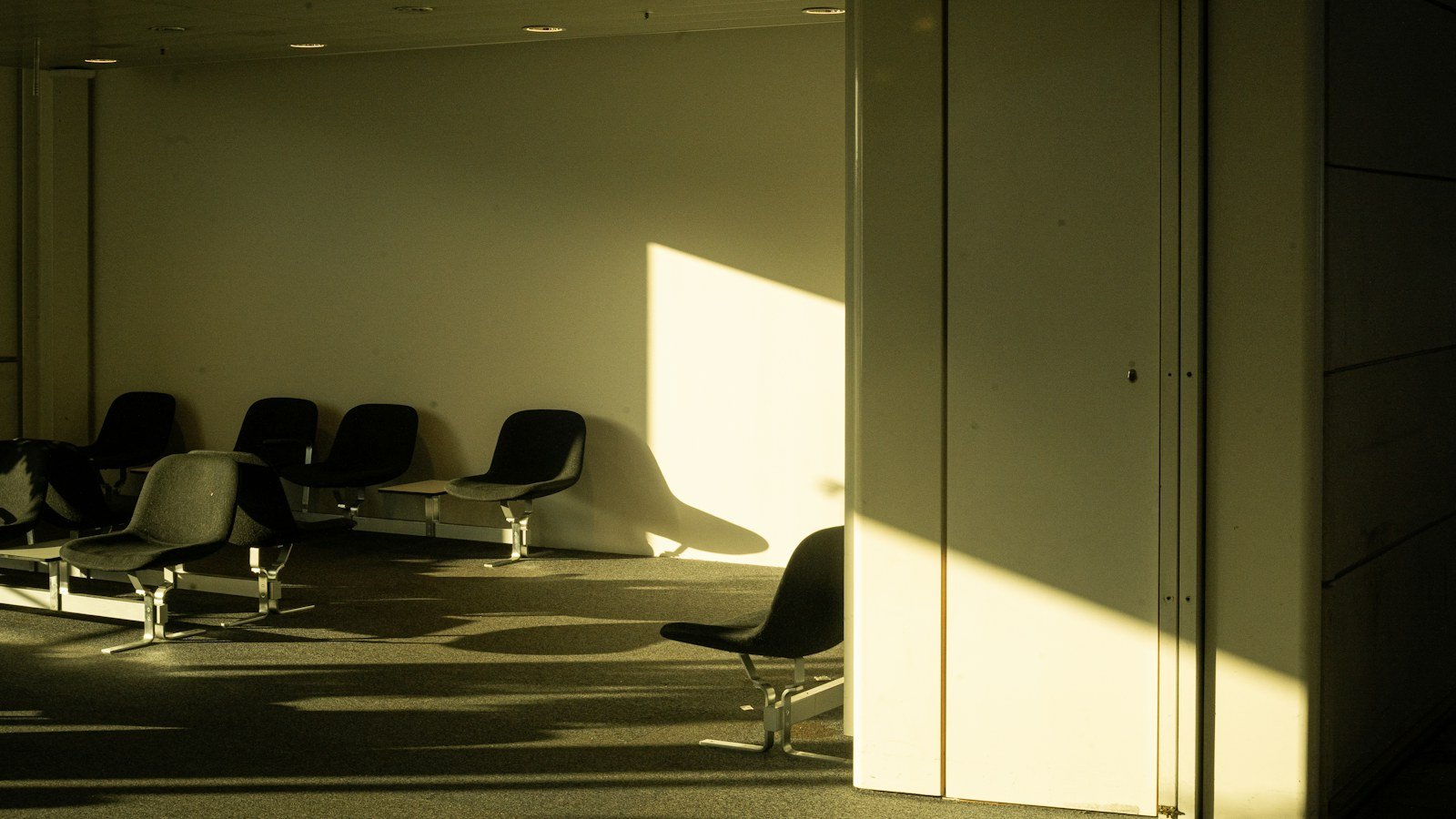
Walk through the corridors of any Indian hospital that treats international patients, late in the evening, and you will see the other half of the business. People sitting on plastic chairs outside wards. Someone asleep across two seats with a shawl over their face. A woman on a video call to a family in another country, holding a phone up so a grandmother can see a door. A man carrying a tiffin box through a lobby, looking for somewhere to sit and eat.
Those are attendants, and the attendant experience decides a great deal more than hospitals admit. The attendant is awake at three in the morning. The attendant remembers who explained things and who did not. The attendant writes the review, answers the family group, and tells the next person from their city where to go. For a patient who has travelled from another country, the attendant is also the only person in the building who is entirely on their side.
Medical value travel is often designed as though the patient arrives alone. They rarely do. A spouse, an adult child, sometimes a parent and a sibling, sometimes a small child who could not be left behind. Those people need to sleep, eat, wash, pray, charge a phone, keep working and stay solvent, for a period nobody has told them the length of.
This is service design work, and it is largely unglamorous. It is also one of the few areas where a hospital can improve its reputation in a source market without spending anything on advertising.
Why the attendant experience is a commercial question
Take the least sentimental view first, because that is the one that gets budget. The people who accompany an international patient are, in practice, the customers. They choose where the family stays. They authorise spending. They compare your hospital with the two others the family considered. They are the ones who sit in the billing queue and the ones who decide whether the experience gets described as caring or as chaotic.
They also spend money in your building. Food, pharmacy, transport, laundry, accommodation if you run any, a hundred small transactions over a long stay. A hospital that makes those things easy captures them. A hospital that does not sends its guests out to a street of unknown options and keeps the complaints anyway.
And they review. Long after the clinical detail has blurred, what survives is whether the family was treated as guests or as an obstruction. The connection between how a family is treated and what it is worth is not vague, and I have argued elsewhere about what patient experience is actually worth on the P and L. In the international segment that link is shorter and faster, because the people who accompany a patient talk to a tightly connected community when they go home.
Count the people who travel, before they arrive
Most hospitals cannot answer a simple question: how many people came with our international patients last month. The information is not captured, so nothing can be planned, and every arrival is handled as a surprise.
Ask at the enquiry stage, plainly and without making it sound like a problem. How many people will travel with the patient. Are any of them children. Does anyone in the group have a mobility or health need of their own. Does anyone need to keep working while they are here. That last question matters more than it sounds, because the person paying is often also the person trying to hold down a job from a corridor.
Put the answers in the case record rather than in somebody’s notebook, so the ward, the catering team and the guest relations desk see the same thing. This is the kind of detail that makes the difference between a desk that runs on paper and an international desk that runs on your CRM. It also lets you plan capacity honestly. If a typical case from one market brings one attendant and a case from another brings three, that is an operational fact you should know before you run a campaign in either market.
Sleep, because everything else rests on it
An exhausted attendant makes a difficult patient, a distrustful family and a bad review. Sleep is the foundation of the rest of the experience and it is where most hospitals are weakest.
There are only a few honest options and each has a cost. A proper recliner or a second bed in the room, which works for one person and is the best answer where the room can take it. Dedicated accommodation on or near the campus, which is a real estate decision rather than a marketing one. Or a properly checked list of nearby places to stay, with a range of prices, verified by someone from the hospital who has actually seen them, updated when they change hands.
What does not work is the current default in many places, which is a chair in a corridor and a polite refusal to discuss it. If you cannot offer a bed, say so at the enquiry stage, before the family has bought tickets. A family that knows in advance can plan. A family that discovers it at midnight after a long flight has already decided how they feel about you.
Attached to sleep are the ordinary things that make a long stay survivable: somewhere to shower, somewhere to wash and dry clothes, a locker or safe for documents and money, a plug that works, and a seat that is not in a passage where a trolley needs to pass. None of that is luxury. It is the minimum for people who may be here for weeks.
Food is service design, not a special request
Food is where hospitals most often treat a straightforward requirement as an inconvenience. A family travelling from far away will have dietary requirements: vegetarian or not, religious rules that they observe, medically restricted diets of their own, staples they are used to, and often a strong preference for food that resembles home when everything else is unfamiliar. There is nothing unusual in any of that. It is information, and it should be collected the way you collect any other service information.
The practical design is simple. Ask once, at enquiry or at admission, record it against the case, and have it reach the kitchen and the ward without the family having to repeat themselves to every new shift. Offer a small number of options that cover the common requirements properly rather than a long menu you cannot deliver. Be exact about what you can and cannot provide, because a family that is told something is available and then finds it is not will assume, reasonably, that other promises are equally soft.
Two details matter more than people expect. The first is the timing of meals, which may not match the ward’s schedule, particularly during periods of fasting, and which is easy to accommodate if anyone asks. The second is somewhere to eat with dignity. A family should not have to eat standing in a corridor because the only table is in a cafeteria that closed at eight. A clean room with tables, hot water and a place to wash hands, open late, costs very little and is remembered for years.
A quiet room that anyone can use
Most international patients come from places where prayer is part of an ordinary day, and so do most Indian patients. A hospital that treats this as a facilities question rather than a sensitive one gets it right with almost no effort.
What is needed is a room, or even a clearly marked corner, that is quiet, clean, uncluttered, open at all hours and available to anyone without booking or explanation. Somewhere to wash beforehand nearby. Shoes accommodated sensibly. No assumptions built into the furnishing that make one group welcome and another awkward. Staff who can tell a visitor where it is without hesitating or fetching a supervisor.
The same room serves the person who is not praying at all and simply needs ten minutes away from a ward to cry, or to take the call in which they tell a family what the surgeon said. That is reason enough on its own. When a hospital gets this right, families mention it unprompted, which tells you how often they find it missing.
The attendant is your communication channel
For an international case, the attendant is the hub. They receive the explanation, translate it for the patient, relay it to relatives in another country, and carry the questions back. Design around that and a great deal of friction disappears.
Give them a fixed time each day when someone will speak to them, and keep it. An uncertain wait for a doctor who may pass at any hour is the single largest source of stress in a long admission. Give them a written summary of the plan at the points where it changes, because they will be repeating it to people who were not in the room. Give them a named person for non-clinical problems so that the nursing station is not absorbing questions about laundry and money.
Give them working connectivity. An international family is holding a conversation across time zones for the whole admission, and wifi that fails in the ward is not a small inconvenience; it is the thing that stops a grandmother seeing her son before an operation. And where the family’s language is not one your ward speaks, do not hand the job to whichever relative speaks the most English. That is unfair to them and unsafe for everybody, which is why interpretation has to be a service rather than a favour.
When the stay runs into months
Some treatments keep a family in India for a long time. The attendant experience changes shape entirely when that happens, and hospitals almost never design for it.
The needs become domestic. Somewhere to cook or to buy familiar food reliably. A way to do laundry every week rather than once. A local connection for a phone. A way to send and receive money. Something for a child to do, and sometimes a conversation about schooling that the hospital cannot solve but can at least point towards. A predictable rhythm, because months of uncertainty grind people down in a way that a week does not.
The money conversation changes too. A long stay is a slow, continuous drain on a family’s savings, and the anxiety about it sits with the attendant rather than with the patient. Clear, early, honest information about what is coming, in writing, is the kindest thing a hospital can offer here, and it is also the thing that keeps the case from collapsing halfway. I have written separately about how money should be handled before arrival, and every principle there matters more as the stay lengthens.
The first hours set the tone for all of it, which is why the arrival experience deserves as much attention as the discharge. A family that was met, fed and shown where to sleep on the first night gives you a great deal of credit later.
What to fix first, and what to stop guessing
Spend one night in your own hospital as an attendant would. Not a walkthrough with the facilities manager at eleven in the morning. Arrive in the evening, try to find food after the cafeteria closes, look for somewhere to sleep, look for the quiet room, try to connect to the wifi in a ward, and try to find out who you would ask about a laundry problem. Take notes. Almost every hospital leader who does this comes back with a list nobody had to research.
Then do three things. Add the attendant questions to your international enquiry form and make the answers visible to the ward, catering and guest relations. Publish, internally first and then to families before they travel, an honest description of what the hospital provides for people who accompany a patient, including what it does not provide. Set a fixed daily briefing time for long-stay international cases and hold someone accountable for it.
Finally, start asking attendants for feedback in their own right, separately from the patient, and in their own language. They will tell you things the patient will not, partly because the patient does not know and partly because patients protect the people who cared for them. It is the cheapest research available to an international desk, and most hospitals have never once asked.
Questions people ask
It is the whole experience of the people who accompany a patient who has travelled for treatment: where they sleep, what they eat, where they can pray or sit quietly, how they are informed, how they stay in touch with relatives at home and how they manage money during the stay. Hospitals design for the patient and improvise for everyone else, which is where most complaints in this segment actually begin.
Because they are the customers in practice. They compare hospitals, authorise spending, make the daily purchases, and write the reviews that reach a tightly connected community back home. They are also the only people awake at night to notice how a ward is run. Improving their experience raises the standing of the hospital in a source market without any advertising spend, which is rare.
You cannot answer that until you record it. Ask at enquiry how many people will travel, whether any are children and whether anyone has needs of their own, and store it in the case record. Patterns differ by market and by treatment. Once the data exists for a few months, capacity planning, catering volumes and accommodation decisions become straightforward instead of being a monthly argument.
Two things. Spending that currently leaves the campus, on food, stay, transport and small purchases, some of which the hospital can capture if it is easy and fairly priced. And fewer abandoned long stays, because families run out of patience and money quietly. Most of the fixes are low cost anyway: an intake question, a fixed briefing time, a clean room open late, a checked list of nearby places to stay.
Ask once, record it against the case, and make sure it reaches the kitchen and every shift without the family repeating themselves. Offer a small set of options you can genuinely deliver, covering common requirements including religious and medically restricted diets, and be exact about what you cannot provide. Treat it as ordinary service information, not as a special request to be negotiated at each meal.
A quiet, clean, uncluttered room or clearly marked corner, open at all hours, available to anyone without booking, with somewhere to wash nearby and sensible provision for shoes. It should not be furnished in a way that makes one group comfortable and another awkward. Staff should be able to direct someone to it immediately. The same room serves anyone who needs a few minutes away from a ward.
It depends on your building and your case mix. A recliner or second bed in the room is the best answer where the room allows. Dedicated guest accommodation is a property decision rather than a marketing one. A checked, honestly priced list of nearby options, verified by someone from the hospital and kept current, is the practical middle path. What fails is offering nothing and not saying so until the family arrives.
Very little in clinical terms, and one thing in habit: a fixed daily time when someone speaks to the family, kept reliably. Waiting all day for a doctor who may pass at any hour is the largest single source of stress in a long admission. Beyond that, a named non-clinical contact for practical problems keeps laundry, money and accommodation questions away from the nursing station.
Closely, and badly when it is ignored. Hospitals often use the most fluent relative as an unofficial interpreter, which is unfair to that person, unreliable for the clinical team and unsafe for the patient. The relative is already carrying the emotional load of the admission. Language cover should be a service the hospital provides and records, not a task quietly delegated to whoever in the family speaks the most English.
The needs become domestic rather than hospital shaped: cooking or reliable familiar food, regular laundry, a local phone connection, a way to receive money, something for a child to do, and above all a predictable rhythm. The financial anxiety also sits with the attendant rather than the patient, so honest written information about what is coming matters more the longer the stay lasts.
Ask them separately from the patient, in their own language, and about specifics rather than satisfaction in general. Ask whether they slept, where they ate last night, whether anyone told them today’s plan and who they would go to with a practical problem. Patients tend to protect the people who cared for them, and they often do not know what their relatives were dealing with outside the room.
Not if the design is universal. A quiet room open to anyone, food options that cover common requirements, a place to sleep, a fixed briefing time: none of that is specific to any one community, and all of it improves the experience for domestic families too. Problems arise only when a hospital builds something for a market it is courting and leaves everybody else where they were.
The intake questions, the daily briefing time and an honest published description of what you provide can be done within a month. Catering changes take a quarter because they involve a kitchen and a contract. Sleeping arrangements and any dedicated accommodation are a longer capital conversation. Start with the cheap items, since they carry most of the perceived improvement, and use the evidence to argue for the rest.
Arrive at your own hospital in the evening and try to be an attendant for a night. Find food after the cafeteria closes, find somewhere to sleep, find the quiet room, connect to the wifi in a ward, work out who to ask about laundry. Bring the list back to your operations meeting. It is the least expensive piece of research an international desk will ever do.
