
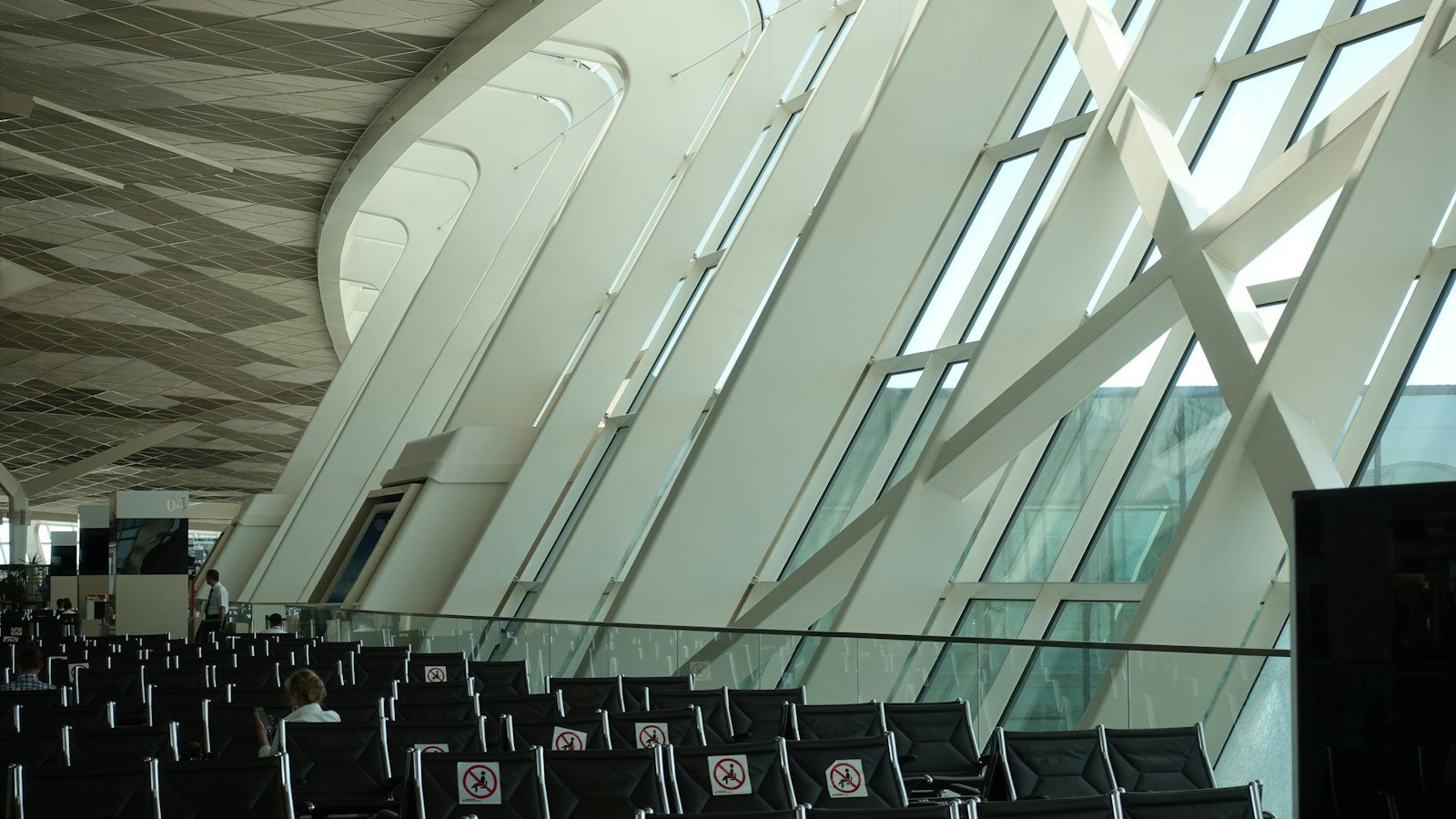
Airport to admission: the first twelve hours that decide the review
The international patient arrival, from the aircraft door to a settled first night, shapes a family’s verdict on the whole stay. Design it as one flow with a named owner per case, a written shift handover, a briefed driver, registration forms that fit international names, the money settled before travel, and a check-in at the end of the first day.
The clinical work is usually the part a hospital is most confident about. What the family says about the stay afterwards, in a group chat at home or in a public review, is often decided long before the first ward round. It gets decided at an airport exit near midnight, at a registration counter, in a lift, in a room where nobody explained where the attendant was going to sleep.
In my experience the international patient arrival, meaning the stretch from the aircraft door to a settled first night, carries more weight in a family’s account of the whole episode than almost any day that follows. Treatment may run for weeks. The story sets in about twelve hours. That is unfair to the clinical team, and it is still true.
Medical value travel makes this sharper than domestic travel does, for reasons that have little to do with the patient and a lot to do with distance. The family has just spent money they can feel. They are tired in a way that shortens patience. They cannot read the signage, cannot tell whether a queue is normal, cannot judge whether the person in front of them has any authority to fix anything. Every small ambiguity gets read as a signal about the hospital.
So the first twelve hours deserve to be designed, owned and measured the way the enquiry stage is. Most hospitals I have seen design the enquiry carefully, design the discharge reasonably well, and leave the arrival to whoever happens to be on duty.
What the first twelve hours actually contain
Write the sequence down once, honestly, and it is longer than anyone expects. The aircraft lands. Immigration takes as long as it takes. Baggage, a currency counter, a phone that has no working connection yet. Somewhere outside there is supposed to be a driver. Then a drive through a city the family has never seen, at an hour when nothing is open. Then a building, a security check, a lobby, a desk.
After that comes registration, identity documents, the attendant’s details, a first conversation about money, a room allocation, a lift, a ward, a nurse, a meal or the absence of one, and a first night in which nobody sleeps properly. Somewhere in there the family is also trying to tell a relative in another country that they arrived safely.
Count the number of separate people who touch that family in those hours. In most hospitals it is a long list: a driver, a security guard, a front desk executive, a registration clerk, a billing executive, a ward secretary, a nurse, a housekeeping attendant, a food service person, and if they are lucky, someone from the international desk. Every one of those handoffs is a place where the case can be dropped.
The sequence is not the problem. The absence of a written sequence is. If you cannot draw the arrival as a single flow on one page, with a named owner at each step, you do not have an arrival process. You have a set of departments that happen to be in the same building.
The international patient arrival has exactly one owner
The single change with the largest effect is also the least expensive: one named person per case, awake and reachable, for the whole arrival window. Not a department. Not a shared inbox. A person, whose name and number the family already has before they board.
That person does not perform every task. They hold the case. They know the flight, they know the room category, they know what the estimate said, they know whether an interpreter is needed and who it is, they know the attendant is a brother and not a spouse, and they know what the family was told at enquiry stage. Continuity is the service. Everything else is logistics.
This works only if the handover between shifts is written rather than spoken. A night arrival handed over verbally at shift change is a case that will be explained from scratch to the family in the morning, which is exactly the moment they conclude that nobody here knows who they are. A short structured note in the system, visible to the desk, the ward and billing, removes most of it. This is one of the reasons an international desk that runs on your CRM beats a desk that runs on individual memory and personal phones.
Name the owner in the pre-arrival message too. A family that lands with one name, one number and one WhatsApp thread behaves completely differently from a family that lands with a hospital switchboard number.
The pickup is a brand moment, not a transport line item
Airport transfers get treated as a cost to be minimised, and they are the first physical contact with the institution. The gap between those two views produces most of the complaints I have seen.
A few things decide how the pickup reads. Whether the driver is there before the flight lands, not after. Whether the name on the sign is spelled the way the family spells it, in the script they use where that is possible. Whether the driver has a phone that is switched on and a number the family already has. Whether anybody told the family what happens if the flight is delayed or diverted, which on some routes is common.
Brief the driver on what he may and may not do. He should not discuss the treatment, quote prices, recommend other hospitals, offer to arrange accommodation, or take the family anywhere other than where the case owner said. That is not distrust of drivers. It is protection for the family, who at that moment will believe anything said by the first person who speaks to them with confidence.
And make the fallback explicit. Flights are late, terminals change, phones do not connect. The family needs one number that works and a written instruction about where to wait. A printed card in the pre-arrival pack, in the language of the source market, does more here than an app ever will.
Registration paperwork written for someone who has never seen it
Most hospital registration forms were designed for a local patient with a local address, a local identity document and a name that fits the fields provided. An international family fails those assumptions at almost every line. Names do not split into first and last in the same way. Some patients have no surname in the form the field expects. Transliteration from another script produces a spelling that will not match the passport unless someone is careful, and a mismatch there will follow the case all the way to the discharge paperwork and the insurance claim at home.
Fix the form before you train people to work around the form. Passport name exactly as printed, a second field for the name the family actually uses, nationality, the attendant’s identity and relationship, a home contact who is not travelling, and the language the family wants to be spoken to in. That last field is the one most systems lack and the one that changes the most downstream.
Consent documents are the other pressure point. A tired person signing a document in a language they read slowly is not a consent process anyone should be comfortable with. That is a case for planned interpreter cover rather than an improvised relative, which is the argument in interpreters as a service, not a favour. The operator’s job is to make sure the right person is present and the signature happens with understanding, not to decide what the document says.
Money at the counter is the worst place to find a gap
If the first serious conversation about money happens at a billing counter after a long flight, something already went wrong upstream. By arrival, the family should know what was quoted, what the advance is, what is included, what is not, what happens if the plan changes and how they can pay. None of that is an arrival conversation. All of it is an enquiry conversation that was left unfinished.
Where arrival can still help is confirmation. Show the family the same numbers they were shown before travel, in the same structure, with the same words. Any difference, even a correct one, needs to be explained by the case owner and not by a cashier reading a screen. A quiet room beats a counter with a queue behind it.
Currency is the practical trap. Exchange rates move, transfers take time, cards get blocked by the issuing bank precisely because a charge is coming from a new country. Tell the family in advance what payment methods work and what to warn their bank about. Then have a plan for the family whose transfer has not landed yet, because there will be one. A written escalation route is kinder and faster than a junior executive deciding on the spot whether a patient can be admitted.
The room, the attendant and the first night
The attendant is a customer. On international cases there are usually more attendants than the room was designed for, they will stay longer than a domestic family would, and they have nowhere else to go. Where they sleep, eat, wash clothes, charge phones, make calls home and pray is not a hospitality nicety. It decides whether the family experiences the stay as care or as endurance. I have written about this at length in the attendant is a customer, and the arrival night is where it first bites.
Food is the fastest win and the one most often missed. A family that lands at night and finds nothing they can eat draws a conclusion about the whole institution within the hour. Knowing the source market well enough to have something appropriate available, and telling the family in advance what will be available, is service design, not indulgence.
Then the small mechanical things. A working phone connection, or clear instructions on getting one. Where to find drinking water. Which lift to use at night. Who to call if something is wrong at three in the morning. Whether there is a space to pray and where it is. None of this costs much. All of it is remembered.
How the first twelve hours show up in your numbers
Read a set of international reviews and you find that a striking share of them are not about clinical care at all. They are about transport, waiting, billing clarity, food, language and whether somebody explained what was happening. Public reviews behave like a second front desk in every hospital, and distance and language only amplify that.
The useful measurement is not a discharge survey. By discharge the family has recovered from the arrival and the memory has settled into a verdict. Ask at the end of the first day instead, briefly, in the family’s language, by WhatsApp, with a small set of questions about what was confusing. The answers are specific and fixable, and the act of asking tells the family that somebody is responsible.
Track a few operational facts as well: the gap between landing and reaching the room, the number of times a family had to repeat information they had already given, how often a night arrival got a written handover, and how often a case owner was actually reachable. Those sit naturally alongside the rest of the funnel, which is the wider argument in the international patient funnel is a digital product. Arrival is a stage in that product, not an afterthought attached to it.
The first thing I would change
Start by drawing the arrival as one flow on one page, from the flight landing to the first morning round, with every person who touches the family and every handover marked. Do it with the desk, the ward, billing and transport in the same room. The gaps will be obvious and uncomfortable, which is the point.
Then do four things in order. Name a case owner for every international arrival, with a written handover at every shift change. Rewrite the pre-arrival message so the family lands with one name, one number, one instruction about where to wait and one honest description of what the first hours will look like. Fix the registration form so an international name, an attendant and a preferred language all have a home in the record. Make the first-day check-in a standing task rather than a favour someone remembers to do.
After that, work on the night shift specifically, because that is where most of the damage happens and where the least attention usually goes. If a family landing at two in the morning gets the same arrival as a family landing at noon, the process is real. If not, you have a daytime process and a night-time apology. A clean arrival also makes the earlier promises credible, which is why it is worth reading alongside why the first reply decides the case. What you promise at enquiry is audited at the airport.
Questions people ask
It is the stretch of the journey from the aircraft door to a settled first night on the ward, usually about twelve hours. It covers immigration, the airport pickup, the drive, security, registration, identity and consent paperwork, the first money conversation, room allocation, the first meal and the first night for both patient and attendant. Hospitals tend to treat it as logistics. Families treat it as evidence of how the institution works.
Distance removes every normal way of checking whether things are going well. The family cannot read the signage, cannot tell a routine wait from a problem, and cannot judge who has authority to help. They have also just spent money on travel and are tired enough to lose patience quickly. So ambiguity gets read as a signal about the hospital, and small lapses carry far more meaning than they would locally.
One named person per case, reachable through the whole arrival window, with a written handover at every shift change. Not a department and not a shared inbox. That person does not do every task. They hold the case, know what was promised at enquiry, know the room and the estimate, and know whether an interpreter is needed. Continuity is the service the family is actually buying.
Ask where the reviews come from and what they mention. A large part of international feedback is about transport, waiting, billing clarity, food and language rather than clinical care. That feedback drives the next family’s decision in the source market, which makes arrival a demand problem with a hospitality surface. It also determines whether the promises made at enquiry stage survive contact with the building.
Fewer billing disputes, fewer discount conversations started by a family who felt misled, fewer cancelled or shortened stays, and better collection because the money conversation happened before travel rather than at a counter. There is also a repeat and referral effect: source markets are small and connected, and families describe the arrival in detail to the next family. None of that needs a new department to capture.
They should arrive before the flight lands, carry the name spelled the way the family spells it, keep a phone switched on, and take the family only where the case owner said. They should not discuss treatment, quote prices, suggest other hospitals or arrange accommodation. That is not distrust. At that moment the family will believe anything said confidently by the first person who speaks to them.
Decide the fallback before it happens and write it down for the family in their own language: one number that works, one place to wait, and one instruction for what to do if nobody is there. Put it in the pre-arrival pack as a printed card rather than only in an app or an email, because connectivity is unreliable in the first hour after landing. Then brief the night team on the same fallback.
Add a field for the passport name exactly as printed and a separate field for the name the family uses, since transliteration creates mismatches that follow the case into discharge paperwork and claims at home. Capture nationality, the attendant’s identity and relationship, a home contact who is not travelling, and the language the family wants to be addressed in. That last field is usually missing and changes the most downstream.
Make the arrival visible in the same record the enquiry lives in, so the desk, the ward and billing see one case rather than three. Allow a structured shift handover note, a preferred language field, and flight and arrival timestamps. Make it work on a phone, because the people doing this work are walking between a lobby, a counter and a ward, not sitting at a desk.
Plan language cover in advance rather than improvising with a relative or a willing colleague. The operator’s job is to make sure the right interpreter is present, the documents are the correct ones, and the signature happens when the family has actually understood what they were told. What the document says and what it means clinically belongs to the treating team. Never let a tired family sign into a language gap.
Mapping it on one page takes an afternoon with the right people in the room. Naming case owners and writing a handover note can start the same week. Rewriting the pre-arrival message and the registration form takes a few weeks because other departments have to agree. Making the night shift as good as the day shift is the slow part, and that is usually a quarter of steady attention rather than a project.
Ask the family at the end of the first day rather than at discharge, briefly, in their own language, about what was confusing. Alongside that, track the gap between landing and reaching the room, how often the family repeated information they had already given, whether a night arrival got a written handover, and whether the case owner was reachable. Those are operational facts, not opinions.
Report arrival as a stage of the international funnel, not as a hospitality anecdote. Show whether cases get a named owner, how often the first-day check-in happened, the themes in first-day feedback, and what changed as a result. Pair it with what reviews in each source market say. Boards respond to a small number of tracked operational commitments far better than to a story about one grateful family.
